 Image 1 of 1
Black Cat / Sabo-Tabby
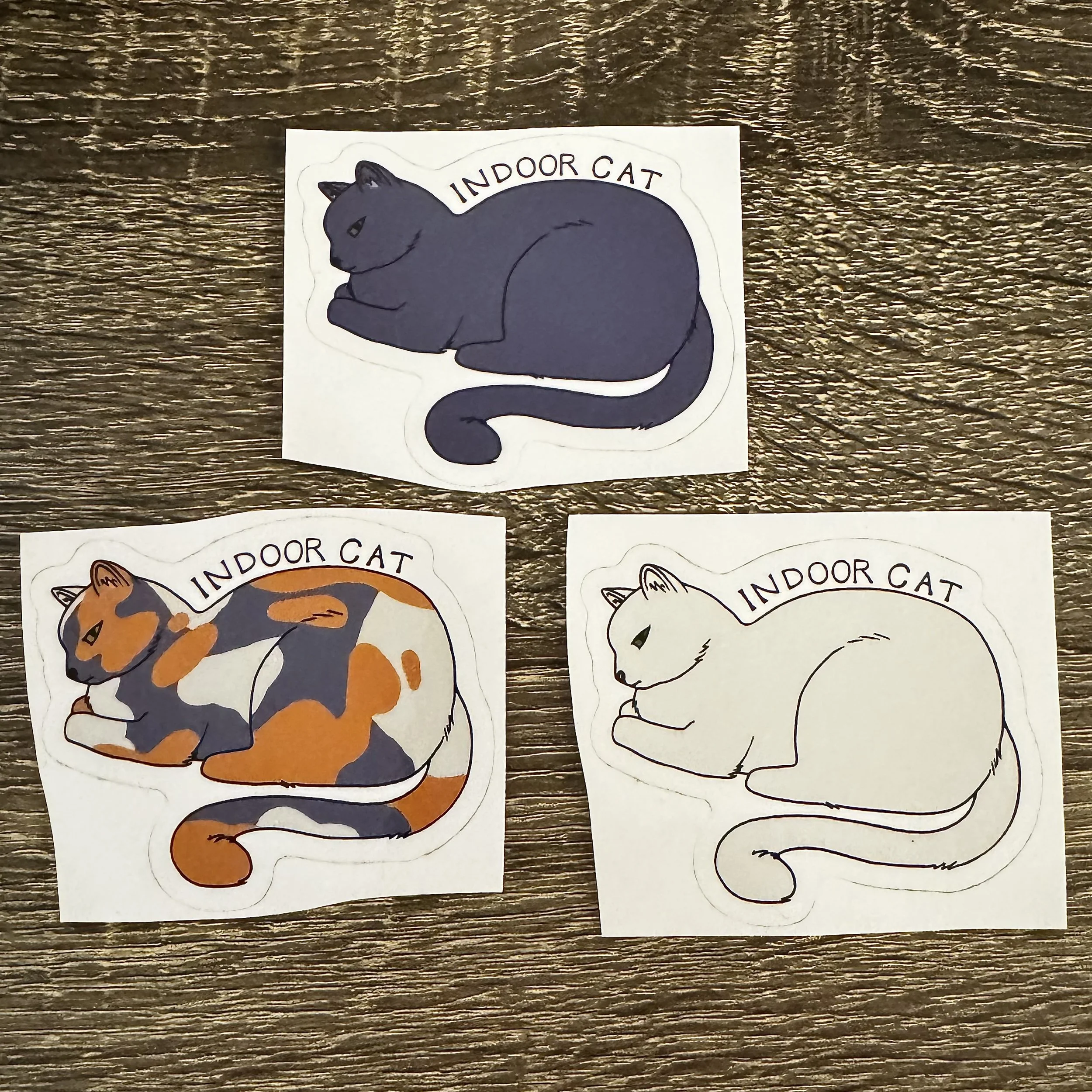
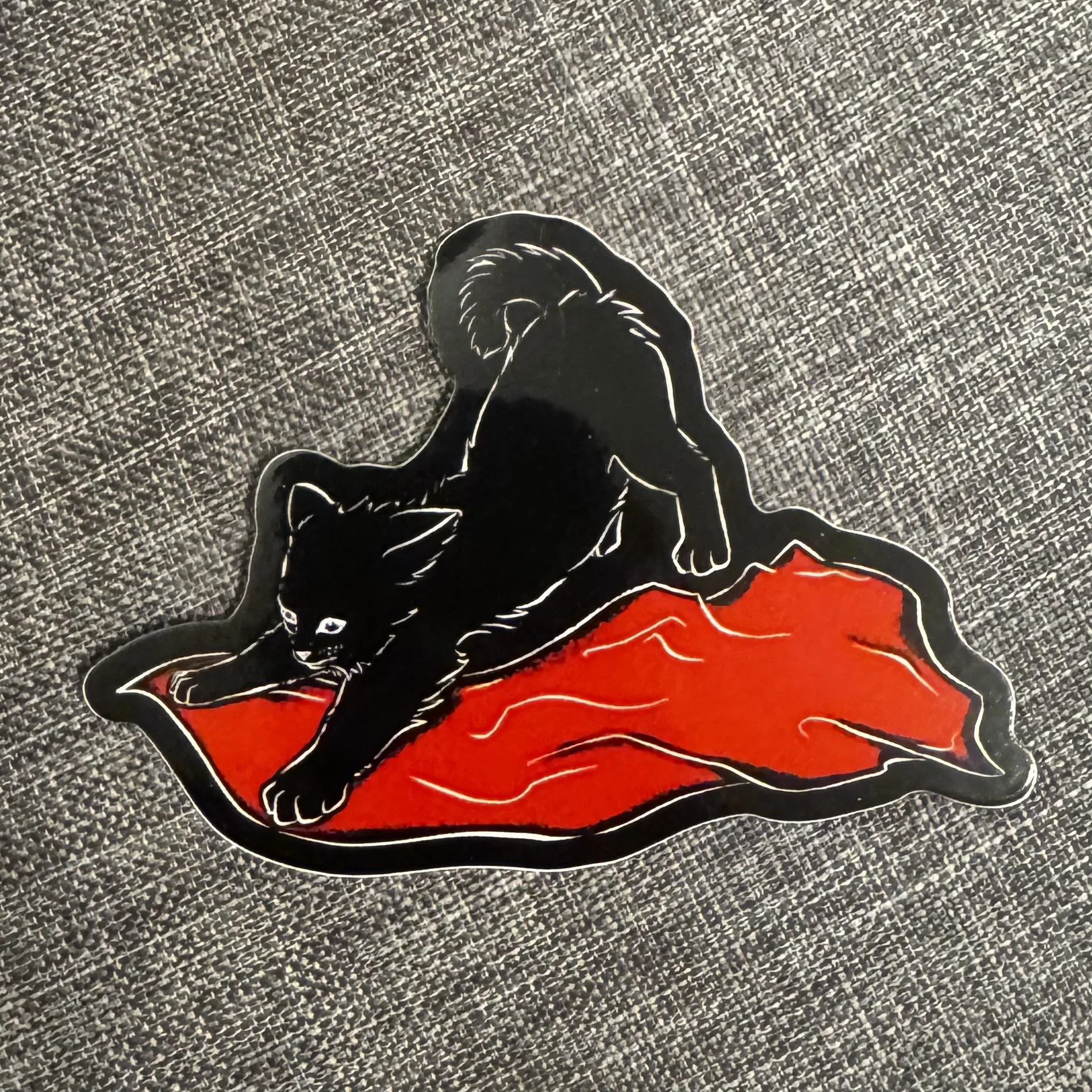
The sab cat is an image often associated with anarcho-syndicalism, a branch of anarchism that focuses on labor organization and direct action. One story of the symbol’s creation comes from an International Workers of the World union (IWW, “Wobblies”) strike, where despairing strikers cared for an starving black cat, which recovered alongside the turning of the tide in their striking efforts to gain some of their demands. It has since been taken up in art and name by numerous artists, collectives, and cooperatives.
The cat here is playing with a red flag or scarf, intended to reference a number of red textile symbols:
Red flags served as an early anarchist symbol
Red neckerchiefs have been worn to represent from socialist and communist movements throughout the world
Red bandanas reference the Battle of Blair Mountain (see reverse) and working class solidarity
I have chosen to draw a kitten - tiny and new, but can still put up a fight. Even if you’re new to resistance, organizing, and mutual aid, you still have a voice and so much opportunity to grow.
Battle of Blair Mountain (1921 - Logan County, WV)
The Battle of Blair Mountain was the largest labor uprising in the United States, and was the largest armed uprising since the Civil War. It occurred during the Coal Wars, a series of early 20th century labor disputes in Appalachia. Logan County, West Virginia. Involved were some 10,000 miners who were seeking to unionize, wearing red bandanas around their necks and known as the “Red Bandana Army”. They confronted 3,000 lawmen and strikebreakers backed by the coal mine operators. The battle ended in their defeat, but brought awareness to their plight and the extreme measures taken by coal companies to suppress unionization.
The red bandana continues to be a symbol of solidarity of working people and a reminder of the sacrifices made in the fight for a more just and equitable society.
Dimensions: 3.5” x 2.75”
Black Cat / Sabo-Tabby
The sab cat is an image often associated with anarcho-syndicalism, a branch of anarchism that focuses on labor organization and direct action. One story of the symbol’s creation comes from an International Workers of the World union (IWW, “Wobblies”) strike, where despairing strikers cared for an starving black cat, which recovered alongside the turning of the tide in their striking efforts to gain some of their demands. It has since been taken up in art and name by numerous artists, collectives, and cooperatives.
The cat here is playing with a red flag or scarf, intended to reference a number of red textile symbols:
Red flags served as an early anarchist symbol
Red neckerchiefs have been worn to represent from socialist and communist movements throughout the world
Red bandanas reference the Battle of Blair Mountain (see reverse) and working class solidarity
I have chosen to draw a kitten - tiny and new, but can still put up a fight. Even if you’re new to resistance, organizing, and mutual aid, you still have a voice and so much opportunity to grow.
Battle of Blair Mountain (1921 - Logan County, WV)
The Battle of Blair Mountain was the largest labor uprising in the United States, and was the largest armed uprising since the Civil War. It occurred during the Coal Wars, a series of early 20th century labor disputes in Appalachia. Logan County, West Virginia. Involved were some 10,000 miners who were seeking to unionize, wearing red bandanas around their necks and known as the “Red Bandana Army”. They confronted 3,000 lawmen and strikebreakers backed by the coal mine operators. The battle ended in their defeat, but brought awareness to their plight and the extreme measures taken by coal companies to suppress unionization.
The red bandana continues to be a symbol of solidarity of working people and a reminder of the sacrifices made in the fight for a more just and equitable society.
Dimensions: 3.5” x 2.75”